
Copy the Individual Post Link
Open the post on your personal profile or Company Page and copy its direct link. Check that its audience is public and the content is accessible. Do not submit the profile or Page homepage.
Buy LinkedIn Likes for a public post on your personal profile or Company Page. Add standard thumbs-up likes from a mixed account pool, starting with 10. Check the reactions on your post, with support and 30-day refill coverage.
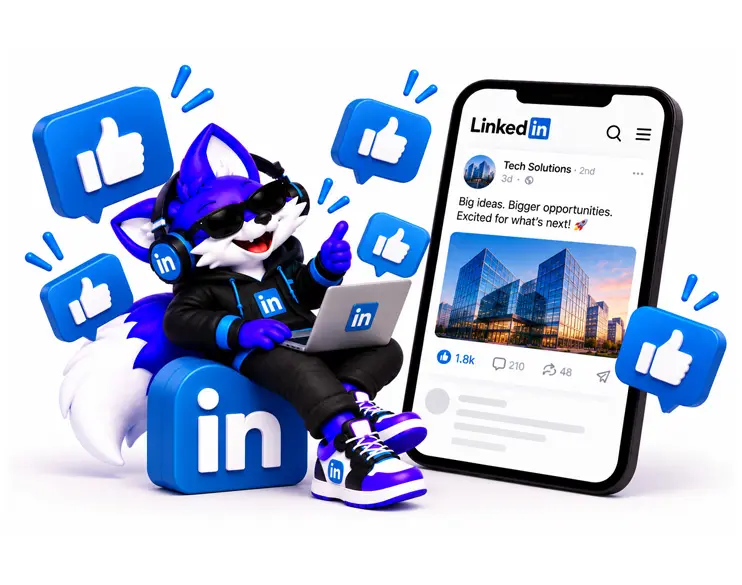
Standard likes cost $100 per 1,000. Choose between 10 and 50,000 for your selected public post.
Orders start within 72 hours, often under 12. Delivery then runs at 2,000 to 5,000 likes daily.
For example, 5,000 likes take approximately 1 to 3 delivery days after starting. The maximum order takes approximately 10 to 25 delivery days.
Drip-feed options are available if you prefer to spread delivery over a different schedule.
Review the selected option before ordering; standard completion estimates do not apply unchanged to a slower delivery plan.
Select a quantity that fits your post and budget. Compare the available packages and review the start window and delivery pace before ordering.
Copy the post link, choose your quantity and check the standard Like reactions.
Open the post on your personal profile or Company Page and copy its direct link. Check that its audience is public and the content is accessible. Do not submit the profile or Page homepage.

Check the existing reactions and note the current Like count where LinkedIn shows the reaction breakdown. Choose your quantity and an available delivery option. This package delivers standard likes, not heart reactions.
Review the post's reactions and reacting accounts. Keep the original post accessible during delivery. Contact support with the order details if you need help checking progress or reviewing a drop.
A defined reaction type, flexible quantities and support throughout your order.
This package delivers the regular thumbs-up Like. You know which reaction you are ordering rather than receiving an unspecified reaction mix.
Public posts from personal profiles and Company Pages are both supported. Choose the particular update you want the likes delivered to.
Support is available before purchase, during delivery and afterward. Discuss the post, quantity and timing before committing to a larger package.
Eligible drops have 30-day refill coverage. Send your order details to support if delivered likes need review during that period.
Choose standard LinkedIn Likes for public personal or Company Page posts, with purchase guidance, flexible quantities, ongoing support, and 30-day refill assistance for eligible drops.
A standard Like, a heart reaction and a mixed-reaction package are different purchases. Compare the exact reaction and terms attached to the offer.
Choose according to the reaction you need, the post you are ordering for and the delivery period you can accept.
A clear announcement, useful lesson and unfinished sales pitch do not need the same purchasing decision.
A specific problem, the work performed and an honestly explained result give readers something concrete to evaluate. Review the post before selecting a quantity; likes do not establish the accuracy of its claims.
Explain what changed and why it matters. If the announcement has a deadline, allow for the full start window and delivery period. The fastest typical start is not a guaranteed schedule.
A practical lesson or informed perspective can remain relevant beyond publication day. Consider whether the content still serves its audience, rather than ordering only because it is new.
First make the role, offer and next step clear. If your main objective is applicants or enquiries, measure those outcomes separately. A larger reaction count does not supply qualified candidates or customers.
Buy LinkedIn Likes for a selected public update, with a quantity and delivery plan that fit your purpose.
Before You Order LinkedIn Likes
Before you Buy LinkedIn Likes, decide which update merits the purchase. A founder's launch announcement, a consultant's case study, and a Company's hiring post have different jobs to do. The package adds standard likes to the post you select; your decision should start with what that post communicates.
This service delivers the regular thumbs-up Like. It does not deliver the heart-shaped Love reaction or a customer-selected mix of Celebrate, Support, and other reactions.
If your post already has several reaction types, its combined reaction total can include all of them. Check the Like breakdown where available rather than treating every reaction beneath the post as the same type.
A strong target explains its value without requiring a visitor to investigate your entire profile. A case study should describe the situation and result. A launch should explain the product and who it serves. An educational post should deliver the lesson promised by its opening.
For a Company Page, keep the update consistent with the business it represents. For a personal profile, publish something you can discuss from experience. If the longer-term objective is your audience size, Buy LinkedIn Followers addresses a different metric from likes on this individual post.
The rate is $100 per 1,000 likes. Ten cost $1, 50 cost $5, and 100 cost $10. These smaller quantities let you limit the initial spend rather than beginning with a large campaign commitment.
Compare the post with your previous updates. If similar content already receives the reaction volume you need, another like order may add little. If the post has barely been viewed, first assess whether its audience, opening, and timing make sense. There is no universal likes-to-views ratio that turns a package into the right purchase.
Likes add visible reaction activity, which can influence a reader's initial impression. They do not verify the author's expertise, the quality of a product, or the truth of the claims in a post.
A like is also different from a substantive response. If your objective concerns discussion, review Buy LinkedIn Comments separately. Purchased reactions should not be presented as independent customer endorsements or evidence of market demand.
Buyers commonly order early after publication or after the initial reaction count has settled. Either can be a planning choice. Orders start within 72 hours, often under 12, so an early purchase does not guarantee delivery during the first few hours.
After starting, standard delivery runs at 2,000 to 5,000 likes daily. For 10,000 likes, allow approximately 2 to 5 delivery days. Choose an available drip-feed option if you prefer a different schedule, and review its timeline before ordering.
LinkedIn recommends content using multiple signals, including professional relevance, the content itself, and member activity. Adding likes does not purchase a guaranteed position in someone's Feed or inclusion in Suggested Posts.
LinkedIn also states that it can reduce distribution of activity it identifies as inauthentic. Its explanation of authentic content and engagement describes those enforcement efforts. Account quality and slower delivery do not guarantee safety or an organic reach increase.
If your campaign concerns a viewing metric, review Buy LinkedIn Views as a separate service. A like order does not include a specified quantity of views.
Public posts on personal profiles and Company Pages are both supported. Use the direct post URL, not the homepage of the person or organization publishing it. The target must remain accessible for delivery.
A connections-only post does not meet the public-post requirement. If a link opens for you because of your account access, check the post's audience before assuming other accounts can reach it. Support at MifaSocial can review an uncertain target before purchase.
Accounts are selected from a mixed pool rather than a customer-chosen profile category. Country targeting is unavailable. Do not interpret a visible job title on a reacting account as a guarantee that the package reaches your ideal customers.
Reactions also do not establish a first-degree connection with those accounts. Buy LinkedIn Connections concerns your personal network, with different requirements and a different result to check.
Record the starting reactions and order date. During delivery, inspect the post's reaction count and the accounts shown in the reaction list. Other people can react or remove reactions during the same period, so the overall total can contain activity beyond your order.
Keep campaign outcomes separate: a hiring post needs relevant applicants, a commercial offer needs suitable enquiries, and a resource post may aim for readership. More reactions alone do not answer whether those objectives were achieved.
Eligible drops have 30-day refill coverage. Contact support with your order details if delivered likes need review. An unstarted order qualifies for the refund condition 72 hours after its stated start deadline. With the full 72-hour start window, that is 144 hours after submission.
A repost and a like perform different actions. If redistribution of the selected content is part of the campaign, review Buy LinkedIn Reposts rather than expecting every reacting account to share the post.
Poll participation is another separate action. Buy LinkedIn Poll Votes concerns the poll's response count, not the likes on its surrounding post. Purchased votes should not be used as representative audience research.
Build the order around the metrics your campaign actually needs. Buying every service is not automatically more useful than improving the content or addressing one specific gap.
Buy LinkedIn Likes with the correct reaction, a considered quantity, and a realistic delivery window. Review the public post URL, standard Like format, and support conditions before checkout.
Answers about reaction types, post eligibility and choosing a suitable order.
This package delivers the standard thumbs-up Like. It does not deliver the heart-shaped Love reaction or a selected mix of other reactions.
Yes. Public, accessible posts from both destination types are supported. Submit the direct URL of the individual post.
No. The target is a post. Profile followers and Company Page followers are separate from post likes.
No. The post must be public and accessible. Access available through your own account does not establish that the target is public.
Review the reaction breakdown where available. The combined reaction total may include Love, Celebrate and other reactions alongside the standard Likes delivered by this package.
Accounts are selected from a mixed pool, not a customer-chosen professional category. Country targeting is unavailable.
No. Buyers may order early or after initial reactions settle. Choose according to the post's purpose and relevance, allowing for the full start and delivery windows.
Yes. Drip-feed options are available. Review the selected schedule before ordering, because it changes the expected delivery period.
No. A reaction does not establish someone's suitability or intention to apply. Assess applicants separately from the post's reaction count.
Contact support with the order details during the 30-day refill coverage period. Support will review the issue for refill eligibility.
It qualifies if it remains unstarted for 72 hours after its stated start deadline. With the full 72-hour start window, that means 144 hours after submission.
Choose an eligible public LinkedIn post, confirm that standard thumbs-up Likes match your goal, and review the delivery and refill conditions before ordering.
Build Your PackageExplore more LinkedIn services for your professional profile, network and content. Choose from followers, connections, likes, reposts, comments, poll votes and views to support different parts of your LinkedIn presence.